
The first real snowfall in Calgary has a habit of arriving mid-week, unannounced, while the ladder is still in the garage and the gutters are still full of September. Every year it catches half the city with leaves in the downspouts and hoses still connected, and every spring the repair calls tell the same story backwards.
Fall maintenance here isn't about tidiness. It's about what chinook winters do to water that has nowhere to drain. This checklist runs the outside of the house top to bottom, splits the jobs you can do from the ones worth handing off, and takes one honest Saturday. If your list turns up damage rather than dirt, our free quote form starts the fix with photos.
Key takeaways
- Clear gutters and downspouts before freeze-up. Trapped water becomes ice, and ice wrecks rooflines from the inside out.
- Chinook cycles mean Calgary homes drain and refreeze all winter, so fall drainage prep matters more here than in steady-cold cities.
- Caulking and sealing gaps takes an hour and pays all winter in comfort and heating costs.
- Decks, fences and hose bibs each need ten minutes of attention before the freeze, not after.
Why fall prep matters more in Calgary
Most Canadian cities freeze once and stay frozen, but Calgary thaws and refreezes all winter as chinooks roll through. Every thaw sends meltwater through gutters, over eaves and along foundations; every refreeze turns whatever didn't drain into expanding ice. Fall preparation decides whether that cycle stays boring.
The City of Calgary's climate-ready home maintenance guidance reads like it was written after a bad chinook: clear the gutters, check the roof, keep storm drains open, direct water away from the house. The list below is the on-the-ground version.
Gutters and downspouts: the one-hour job that saves foundations
Scoop the debris, flush each run with a hose, confirm water moves briskly to the downspouts, and make sure extensions carry it well away from the foundation before the ground freezes. Gutters that enter winter clean handle chinook melts. Gutters that enter winter full become ice trays bolted to your roofline.
Watch the water while you flush. Pooling in the middle of a run means the slope has sagged, and overflow at a corner means an undersized or blocked drop. Both are fall fixes, cheap ones, and both get expensive once ice finds them. Sagging runs, separated seams and tired fascia are exactly what our gutter, soffit and fascia crew sorts before freeze-up.
And if the ladder isn't happening, that's fine. Gutter cleaning is part of our property services, done with photos of anything we find while we're up there.
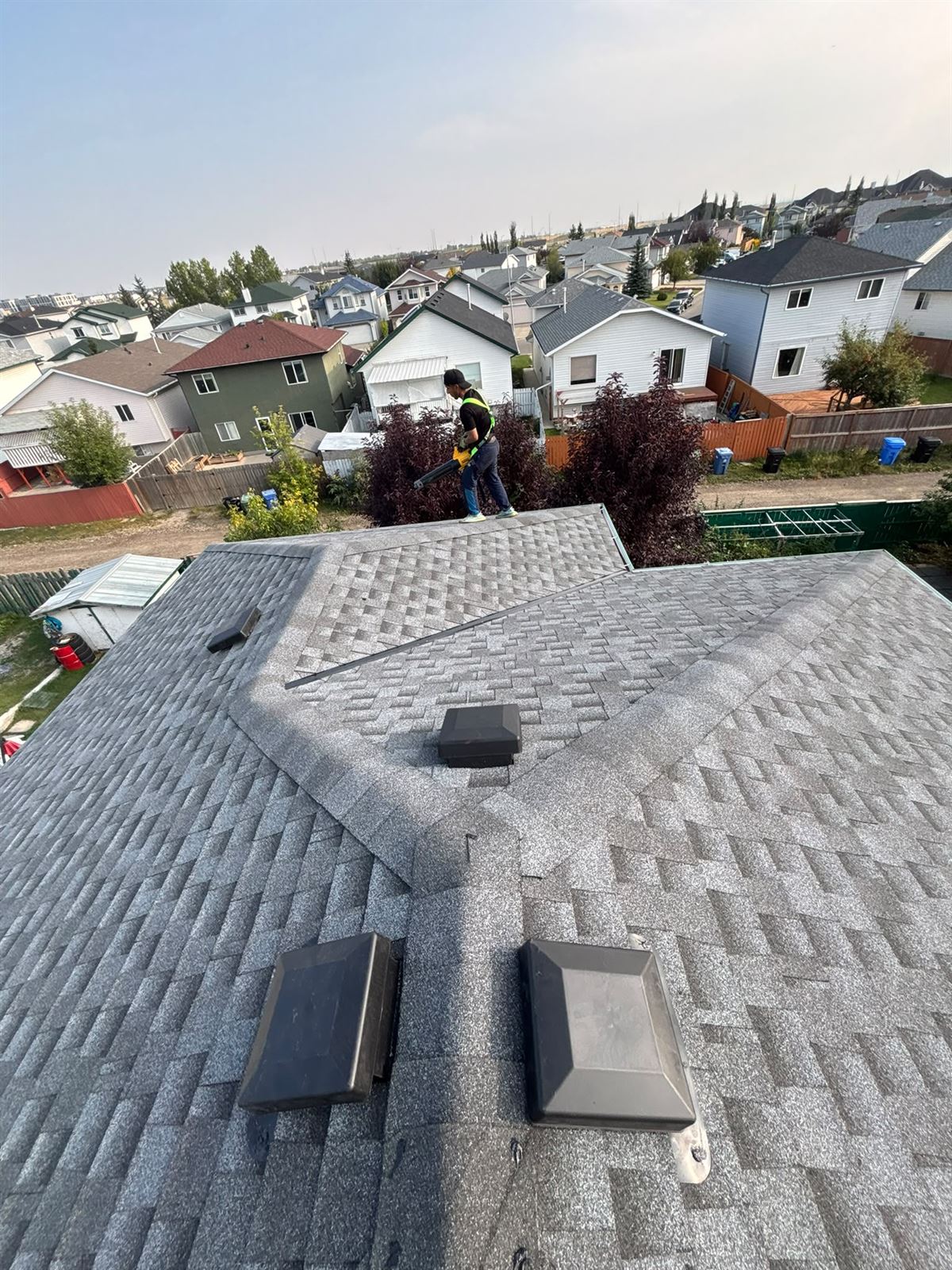
The roofline: shingles, flashing, soffit
From the ground, scan for lifted or missing shingles, flashing that has pulled away, and soffit vents blocked by debris or nests. Winter attic ventilation depends on clear soffits, and blocked airflow is where ice damming starts, from the inside of the roof, not the outside.
Ice dams are worth understanding for one sentence: heat escaping a poorly ventilated attic melts the underside of the snowpack, and the meltwater refreezes at the cold eaves, building a dam that pushes water backwards under shingles. Icicle fangs along the eaves look festive and testify to exactly this problem.
Anything your ground-level scan flags deserves eyes-on before winter, and fall is the season roof repairs book quickest. If the summer brought hail your way, run our hail damage checklist as part of the same walk-around.
Rather hand the whole list to one crew? We do fall exterior checks with photos of everything we find, and quotes only for what actually needs fixing.
Get a Free QuoteWalls, windows and the caulking hour
Walk the walls with a caulking gun: gaps around window frames, door trim, hose bibs, vents and where utilities enter the house all get sealed before the cold arrives. It's the least skilled job on this list and one of the best returns, paid back in draft-free rooms and lower heating bills.
While you're circling, look at the siding itself. Cracked panels, popped nails and trim pulling away are all small fall fixes that become water problems under snow load. South and west walls age fastest here, courtesy of sun and storm exposure, so give them the slow lap.
Decks, fences and the yard
Clear leaves off the deck so they don't compost into the board gaps, confirm railings are tight, push on fence posts to catch any that loosened over summer, disconnect hoses and drain outdoor taps. Ten minutes each, and every one of them prevents a specific spring repair.
Wood decks appreciate going into winter clean and, if the stain has faded, with a fresh coat applied while daytime temperatures still cooperate. A loose fence post found now is a simple reset; the same post after a winter of frost cycling is a lean, and our post on why Calgary fences lean explains what the frost will do with any head start you give it.
Finish at the foundation line: rake soil and mulch so the grade slopes away from the house, and clear window wells of leaves. Meltwater follows gravity all winter, and fall is when you choose where it goes.
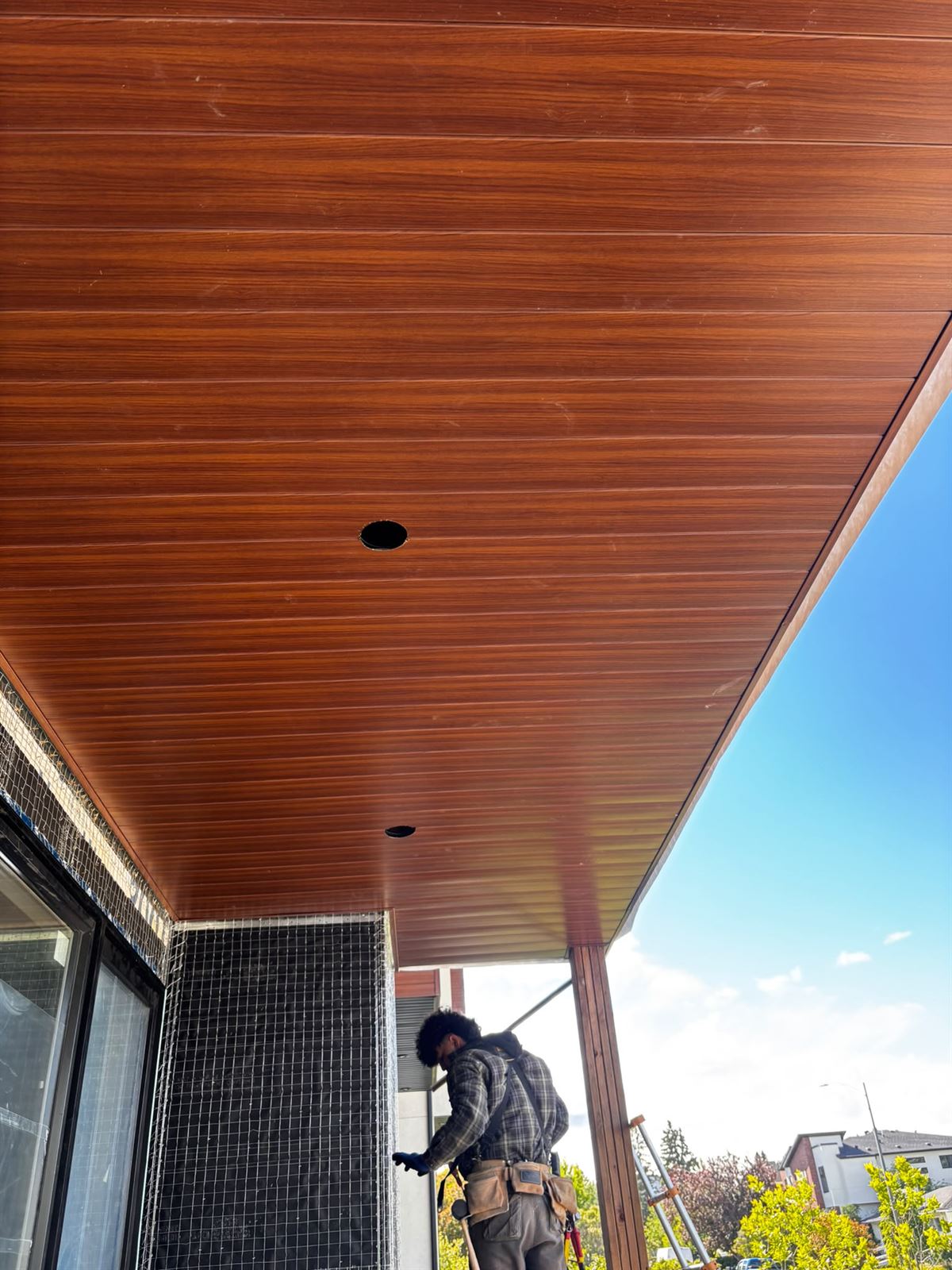
The structures everyone forgets
Sheds, pergolas, gazebos and fabric shelters carry snow all winter without the engineering a house roof gets, and Calgary's wet spring snows are the heavy kind. Give each one a fall check: rafters sound, fasteners tight, fabric covers taken down rather than tested, and shed roofs cleared of the branches that concentrate load.
Detached garages deserve the same gutter treatment as the house, and for the same reason: their foundations sit beside driveways and walkways where refrozen overflow becomes a skating rink you use daily. Five extra minutes with the scoop covers it.
Only have two hours? Do it in this order
Real weekends run short, so here's the triage: gutters and downspouts first, hose bibs and irrigation second, caulking third, and the walkaround scan last with your phone camera out. Drainage beats everything else on the list because water is what winter weaponizes; comfort and cosmetics can wait for a warm week.
Everything your camera catches becomes the second pile, the needs-a-pro pile, and photos taken in October get quotes booked while calendars are still open. The same photos taken in March compete with every other thaw discovery in the city.
The ten-minute walkaround list
Print this, pour a coffee, and circle the house once:
- Gutters scooped, flushed and draining fast; extensions aimed away from the foundation
- Ground-level roof scan: shingles, flashing, soffit vents, chimney line
- Caulking refreshed around windows, doors, vents and penetrations
- Siding checked for cracks and loose trim, south and west walls especially
- Deck cleared, railings tight, wood surfaces clean or freshly stained
- Fence posts pushed, gates swinging clean, latches working
- Hoses off, exterior taps drained, irrigation blown out
- Grade and window wells directing water away from the house
Your next step
Work the list on the next decent Saturday, and split the results into two piles: done, and needs a pro. Send the second pile as photos through the free quote form or call (587) 581-0198, and we'll quote exactly what winter would otherwise make worse. The freeze picks its own date every year. The houses that shrug it off picked theirs first.
Frequently asked questions
When should gutters be cleaned in Calgary?
After the leaves finish dropping and before the first sustained freeze, which usually means October. Homes under mature trees deserve a second pass in spring. The goal is simple: no standing debris when the first chinook melt runs through.
What is ice damming and how do I prevent it?
Ice damming is meltwater refreezing at your cold roof edges and backing up under the shingles. Prevention is airflow and drainage: clear soffit vents, adequate attic insulation and clean gutters. Persistent icicle build-up along the eaves is the warning sign worth acting on.
Should I pressure wash my house before winter?
A fall house wash clears the grime and organic debris that otherwise sits on siding under snow all winter, and it doubles as a close-up inspection of every wall. It matters most for north-facing walls where algae gets a foothold.
Can roofing and exterior work be done in fall or winter?
Fall is prime time, and many repairs carry on through winter within temperature limits for sealants and shingles. Booking assessments in fall means materials and permits are sorted before the weather windows narrow.
How do I winterize a wood deck?
Clear debris from the surface and the gaps between boards, wash it, and re-stain if water has stopped beading, while daytime temperatures are still warm enough for the product. Don’t let leaf piles sit over winter: they hold moisture against the wood exactly where it drains slowest.
About Silverstone Reno & Construction
Silverstone Reno & Construction Ltd. is a Calgary renovation and exterior company with 15+ years of combined experience across roofing, siding, decks, fences and full renovations. Every project gets a written proposal, one point of contact and a workmanship guarantee. Call (587) 581-0198 or start a free photo quote any time.