
The storm rolls through at supper time. Twenty minutes of white noise on the windows, a lawn full of ice pellets, and by morning the sun is out like nothing happened. Your roof looks fine from the driveway. Your neighbour's roof looks fine too. And that's exactly the problem, because the damage hail does to asphalt shingles is mostly invisible from the ground on day one.
We inspect Calgary roofs all storm season, and the pattern repeats every year: the homeowners who check early catch small problems, and the ones who wait find out during a February thaw. This checklist covers what you can see safely from the ground, what to look for inside the house, and when to hand it off to a professional. If you'd rather skip straight to a trained set of eyes, a free roof assessment starts with photos and takes minutes to request.
Key takeaways
- Granules collecting in gutters, downspouts and splash blocks are the clearest ground-level sign of hail damage.
- Dents in soft metal, vents, flashing and gutters, tell you the hail was big enough to hurt shingles too.
- Hail damage spreads in a random scatter. Damage in straight lines usually points to wind instead.
- Document everything with dated photos before repairs begin. Your insurer will want them.
Why Calgary roofs take more hail than almost anywhere in Canada
Calgary sits in the stretch of Alberta that insurers call Hailstorm Alley, where warm summer air rides up the foothills and builds the kind of storm cells that drop hail several times a season. A Calgary roof isn't asked to survive one bad storm. It's asked to survive one or two every summer for its entire service life.
That repetition matters. A shingle that shrugs off its first hailstorm may already be carrying bruises that the next storm opens up. The City of Calgary's own climate-ready home maintenance guidance treats roof checks as routine seasonal work here, and after fifteen-plus combined years on Calgary roofs, so do we.
The ground-level check: what you can see without a ladder
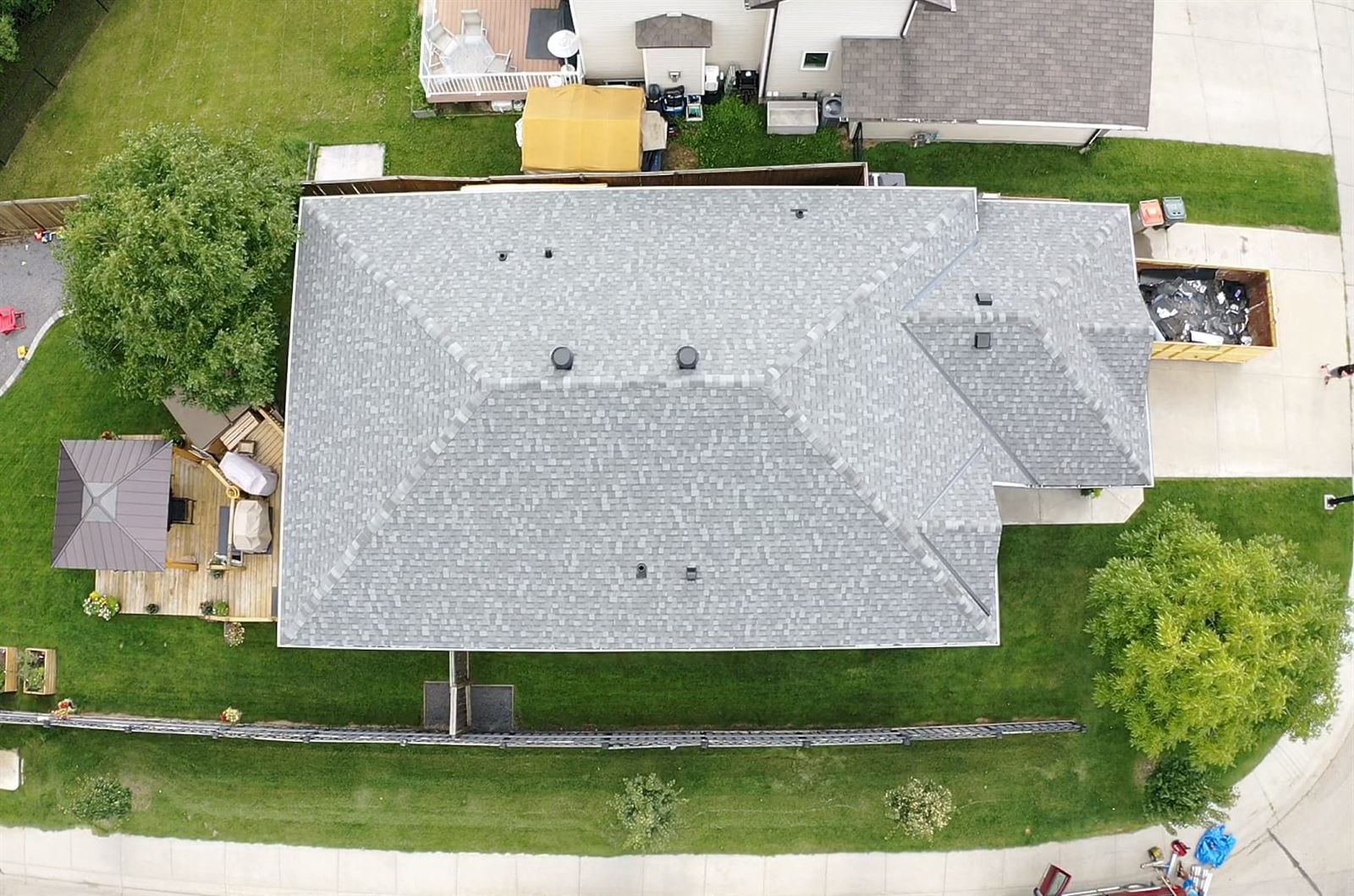
You can spot most early hail evidence from your driveway and your downspouts. Look for granule piles at the base of downspouts, dents in soft metal like gutters and roof vents, dark spots on shingles where granules tore away, and a random scatter pattern across the slope. Binoculars or a phone camera on full zoom beat climbing any day.
Start at the downspouts. Shingles shed a few granules all their lives, but a hailstorm knocks them loose in bulk, and gravity collects the evidence for you. A fresh pile of crushed-stone granules in the splash block after a storm is the single most reliable sign that your shingles took a beating.
Move to the metal next. Gutters, downspouts, roof vents and flashing dent at smaller hail sizes than the ice it takes to bruise a shingle. Walk the house and sight down each gutter run. If the metal took visible hits, assume the shingles above it did too, and note how big the dents are. Dime-sized dents and toonie-sized dents tell an adjuster two different stories.
Then scan the slopes themselves. You're looking for dark dots scattered like thrown confetti, which is exposed asphalt where granules used to be. Check the west and south faces hardest, since Calgary storms usually arrive on those elevations. And don't forget the soft targets at ground level: window screens, deck boards, siding and anything parked outside all record hail size honestly.
One rule we won't bend: stay off the roof. A bruised shingle underfoot tears easily, a post-storm roof is slick, and nothing on this checklist is worth a ladder fall. The close-up inspection is our job, and it's part of every Silverstone roofing assessment.
Signs hiding inside the house
Indoors, hail damage shows up as water evidence: fresh stains on top-floor ceilings, damp insulation in the attic, dark streaks on rafters, or a musty smell that wasn't there before the storm. These signs mean water is already through the roof deck, which moves the job from inspection to repair.
Grab a flashlight and give the attic ten minutes on a dry day, then again during the next hard rain if you have any doubt. Water follows framing sideways before it drips, so a stain on the ceiling can start at a hail bruise a couple of metres uphill. Finding it early is the difference between replacing shingles and replacing drywall.
Not sure what you’re looking at? Send us photos of your downspouts, gutters and any dented metal. We’ll tell you straight whether it’s worth a closer look.
Get a Free QuoteWhat hail actually does to a shingle
A hailstone doesn't usually punch a hole. It bruises the shingle, crushing the fibreglass mat under the surface and shaking granules loose from the impact point. The shingle keeps shedding water for now, while sun and freeze-thaw slowly break down the exposed asphalt until a leak opens, often a year or two later.
That delay is what makes hail damage sneaky. The roof passes the eye test all autumn, sails through winter, and starts leaking during a spring melt long after the storm date has faded from memory. By then, connecting the leak to the storm is harder, and insurance claims typically have time limits measured from the date of the damage.
Bruises also age a roof wholesale. A slope that took heavy hail might not leak anywhere yet, but its remaining lifespan just got shorter across every square metre. That's why adjusters count hits per test square instead of hunting for individual holes.
Document first, repair second
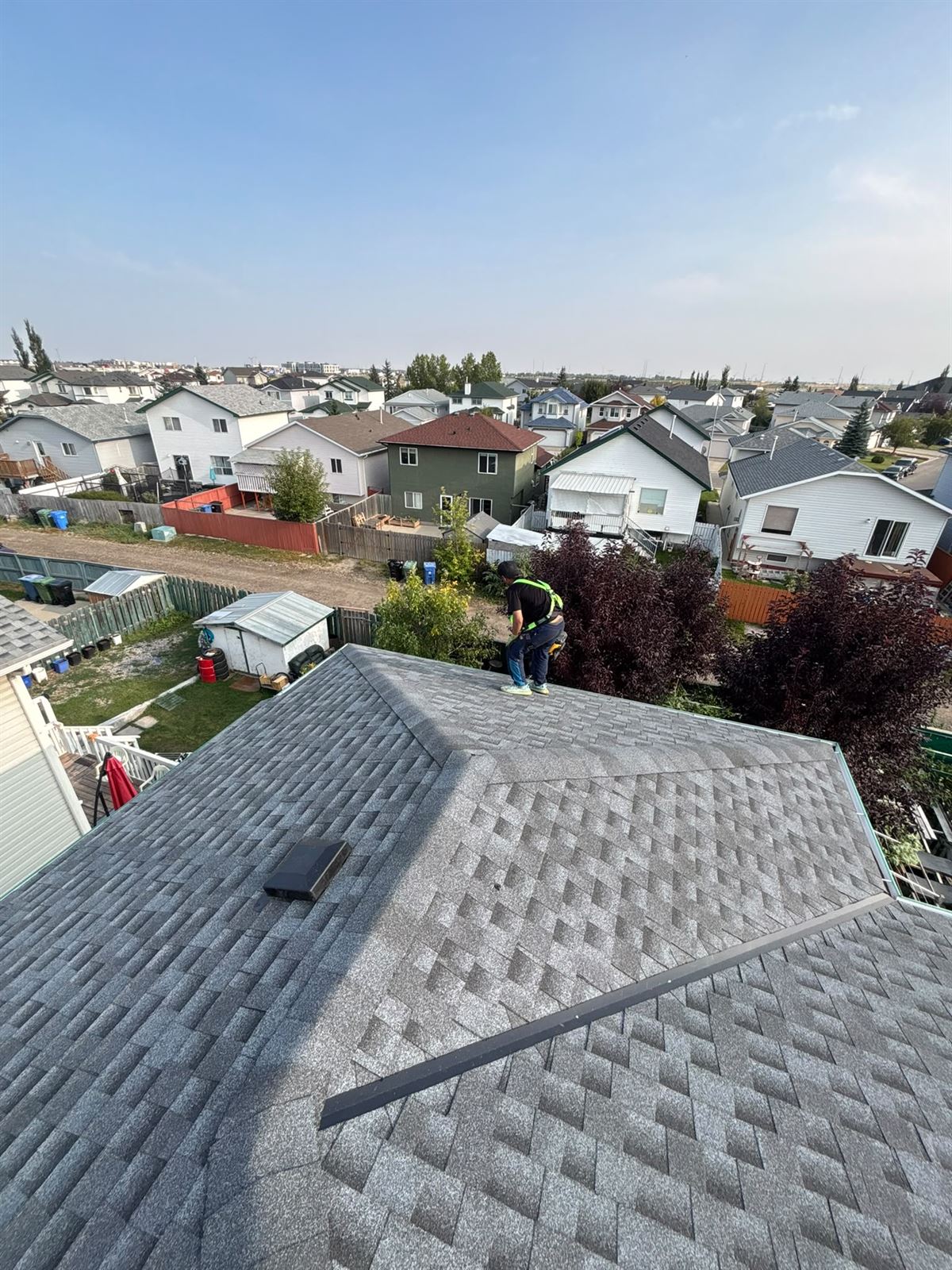
Before anyone touches the roof, build your paper trail: dated photos of granule piles, dented metal, damaged screens and each roof slope, plus a note of the storm date and rough hail size. Solid documentation protects your claim, speeds up the adjuster's visit and keeps every conversation honest.
Use whatever the hail hit as a size reference. A golf ball beside a dented barbecue lid says more than a paragraph of description. Photograph wide first, then close, and keep everything in one folder with the storm date in the file names.
When we assess hail damage, we document it the same way and hand you the photos, whether or not the job goes anywhere. That's deliberate. You should never have to take a contractor's word for what's up there, ours included.
Read the neighbourhood, not just your roof
Your street is a hail gauge. Watch for roofing trucks appearing on nearby driveways, adjusters photographing homes with your same storm exposure, and lawn signs sprouting on the block. If three neighbours with similar roofs are filing claims, your roof took the same storm, whatever it looks like from the sidewalk.
Talk to the neighbours who've had inspections done. Hail cells are narrow, and damage can be severe on one street and absent two blocks over, so the closest data points are the houses beside yours. A neighbour's approved claim from the same storm date is useful context when your own adjuster visits.
The flip side deserves saying too. A block full of storm-chaser signs doesn't prove your roof is damaged, and signing with whoever knocks first is how homeowners end up in bad contracts. Gather the neighbourhood evidence, then choose your own contractor on your own schedule.
What Class 4 actually buys you
Impact ratings run from Class 1 to Class 4, with Class 4 as the top tier, earned by surviving a two-inch steel ball dropped from height in lab testing. In a city that gets hammered as often as Calgary does, a Class 4 shingle is the difference between checking this list every summer and mostly skipping it.
The ratings matter twice. Once at storm time, when the shingle takes the hit and keeps its granules, and once at insurance time, since some Alberta insurers offer premium consideration for impact-rated roofs. Ask your broker before you re-roof; the answer can change the material math.
Class 4 isn't only an asphalt story, either. Metal roofing and rubber-composite products carry the rating too, and each brings its own look and lifespan to the decision. When a replacement is on the table anyway, it's the right moment to compare all three.
Repair or replace: an honest answer
Light hail on a young roof often means repairs: swapping bruised shingles, resealing exposed fasteners and repairing soft metal. Widespread bruising on an older roof usually means replacement, because patching hundreds of impact points costs more than it saves. The honest answer comes from counting hits, not from a sales script.
Beware the post-storm door knockers who diagnose a total loss from the sidewalk. Calgary fills up with out-of-town crews after every major hailstorm, and some of them write the same prescription for every address. A legitimate assessment shows you the evidence, explains the count and puts the recommendation in writing.
Hail rarely stops at shingles, either. The same storm that bruises a roof cracks vinyl siding and dents gutters, soffit and fascia, so it's worth having one contractor look at the whole exterior while they're there. One scope beats three claims handled piecemeal.
Your next step
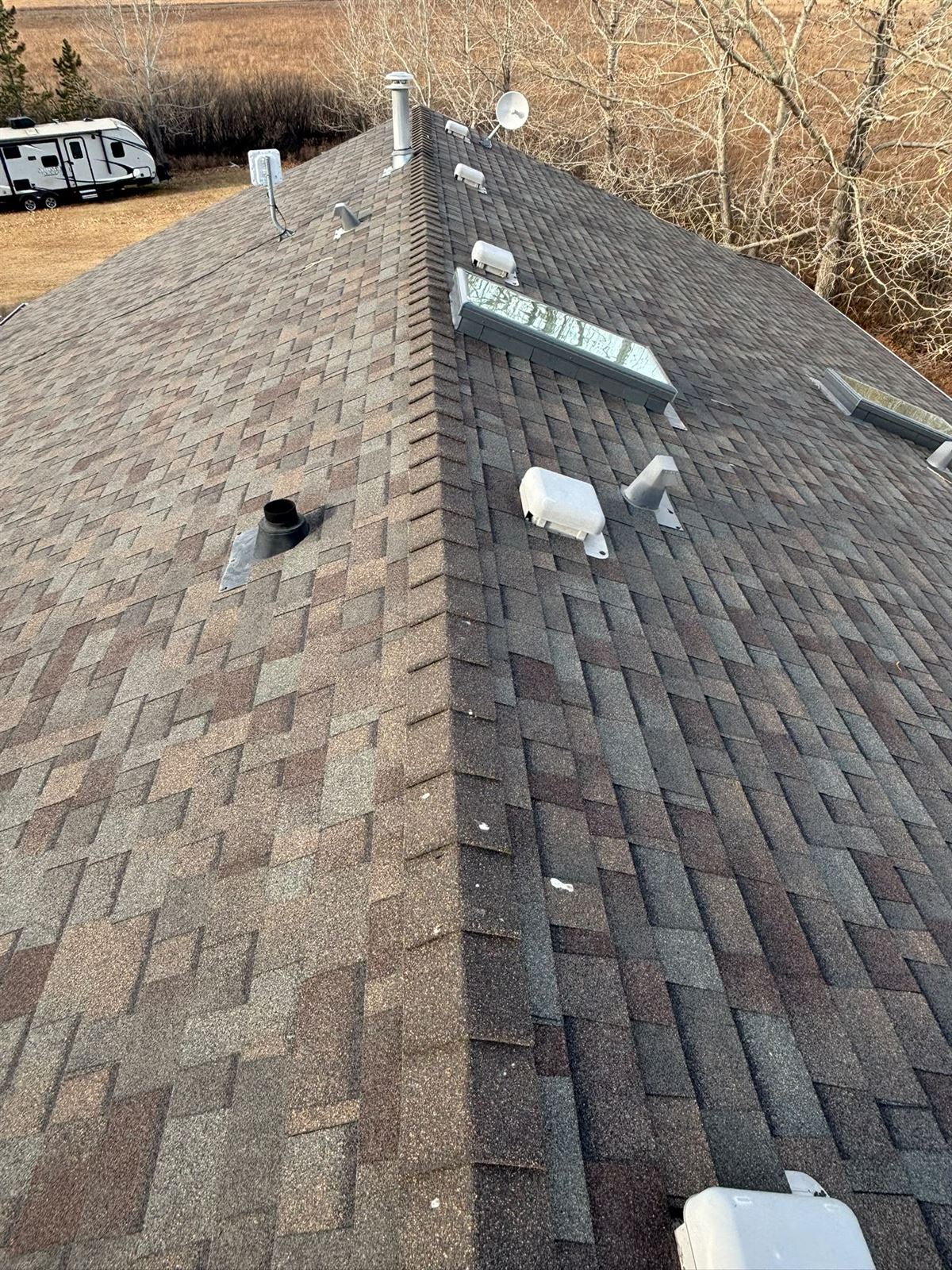
Walk the checklist this week while the evidence is fresh: downspouts, metal, slopes, attic. If anything on the list turns up, send us your photos through the free quote form or call (587) 581-0198. You'll get a straight read on what the storm did, a documented assessment, and a written proposal only if the roof actually needs work. Storm season doesn't wait for convenient timing, and neither do claim deadlines.
Frequently asked questions
Can hail damage a roof without any visible signs from the ground?
Yes, and it happens often. Bruised shingles can look normal from the driveway while the mat underneath is fractured. Granules in downspouts and dents in soft metal are your proxies: if either shows up, a close-up inspection is worth arranging even when the slopes look clean.
How soon after a hailstorm should I check my roof?
Within a few days, while granule piles are still sitting in the splash blocks and the storm date is easy to establish. Insurance claims run on documentation, and evidence washes away with the next rain.
Will insurance cover hail damage to my roof in Calgary?
Most Alberta home policies cover hail, but terms, deductibles and claim windows differ by insurer, so your policy is the real answer. Our job is the documented assessment and the repair; we photograph everything so your claim stands on evidence.
What size hail damages an asphalt roof?
It depends on shingle age and condition. Older, sun-baked shingles bruise at smaller sizes than new impact-rated products. As a working rule, hail that dents your gutters or vents is big enough to take seriously on the shingles above them.
Is it worth upgrading shingles after hail damage?
Usually, yes. If a storm forces a replacement anyway, stepping up to Class 4 impact-rated shingles buys real resilience for the next storm, and some insurers recognize the upgrade. We quote both options side by side so you can decide with numbers.
About Silverstone Reno & Construction
Silverstone Reno & Construction Ltd. is a Calgary renovation and exterior company with 15+ years of combined experience across roofing, siding, decks, fences and full renovations. Every project gets a written proposal, one point of contact and a workmanship guarantee. Call (587) 581-0198 or start a free photo quote any time.