
There's a belief we run into on half our siding quotes: that vinyl and hardie board are basically the same product at two price points, so the cheaper one wins. One hailstorm settles that argument, and in this city you rarely wait long for the demonstration.
Siding is the core trade on our trucks, and we install both materials every season, so this isn't a pitch for the expensive option. It's the plain-language comparison we'd want if we were writing the cheque, covering impact, cold, fire, looks and the blended approach that quietly wins on many Calgary homes. If your walls are already showing storm damage, skip ahead and request a free siding assessment with a few photos.
Key takeaways
- Fibre cement (hardie board) takes Calgary hail dramatically better than standard vinyl, and it's non-combustible.
- Vinyl wins on purchase price and still makes sense on sheltered elevations and tight budgets.
- Cold snaps make vinyl brittle exactly when chinook-driven hail and debris arrive.
- Many smart re-sides blend the two: hardie where the weather hits, vinyl where it doesn't.
The two-minute version
Hardie board is a dense fibre-cement plank, several times thicker than a vinyl panel, that resists hail impact, doesn't burn and holds paint for years; it costs more up front. Vinyl is lighter on the budget and quick to install, but Calgary-sized hail cracks it, especially in cold weather. Exposure and budget decide the rest.
If you stopped reading here and picked hardie for the storm-facing elevations, you'd be making the same call we make on our own projects. The rest of this post is the why, plus the cases where vinyl genuinely is the right answer.
What Calgary hail does to vinyl
Vinyl siding handles ordinary weather fine, but hail is its known weakness: direct hits crack the panel face, and cold makes it worse, because vinyl turns brittle as temperatures drop. A summer storm leaves scattered crescent cracks; a cold-season storm can shatter panels outright.
The failure isn't always visible from the sidewalk, either. Hairline cracks let water behind the panel, where it works on the wrap and sheathing quietly. By the time a wall shows staining, the repair has grown past siding.
There's also the matching problem nobody warns you about. Vinyl colours fade in our high-altitude sun, and product lines get discontinued, so replacing one storm-damaged wall three years in often means a visible patch. We tell homeowners this straight before every partial repair, and our siding page covers how we handle it.
To be fair to vinyl, impact-rated panels exist and perform better than the builder-grade product. They close some of the gap, at some of the price difference.
How hardie board handles the same storm
Fibre cement is cement, sand and cellulose pressed into a plank, and it treats most hail as a non-event. James Hardie publishes hail-resistance and durability data for its planks, and the material is non-combustible with a Class A fire rating. It shrugs off freeze-thaw and holds factory finishes for years.
Weight is the reason for the price gap. Hardie planks are heavy, cut like cement and demand proper technique, flashing and clearances, so the labour is real. You're paying for material and for craft.
What you get back is an exterior that treats hail season as background noise, plus a fire-resistance story that matters more every summer. And because the boards are dimensionally stable through our temperature swings, caulked joints and paint lines stay tight instead of working themselves open.
Wondering what your walls would cost in each material? One set of photos gets you both numbers in a single written proposal.
Get a Free QuoteWhere vinyl still makes sense
Vinyl earns its place on sheltered elevations, secondary buildings, rental properties and any project where the budget decides between new siding and none. Modern profiles look sharp, installation is fast, and on walls the weather can't reach, its hail weakness may never be tested.
North-facing walls, courtyard walls and elevations screened by neighbouring houses take a fraction of the punishment the west face takes. Cladding those in vinyl is rational, not cheap. The same logic applies to garages and detached shops.
Our rule of thumb: never let vinyl's price put it on the wall that faces the storm track, and never let hardie's reputation force it onto a wall that vinyl would protect just as well.
The blended approach most guides skip
Plenty of Calgary re-sides put hardie on the front and the storm-facing sides, then run quality vinyl on sheltered elevations. The blend buys impact resistance and curb appeal where they count while keeping the total inside a real-world budget. Done with matched colours, nobody ever notices.
This is the option most bids never mention, because it takes more planning than a one-material bid. It's also where an exterior-first contractor earns their keep: the transitions, trim and colour matching have to be deliberate.
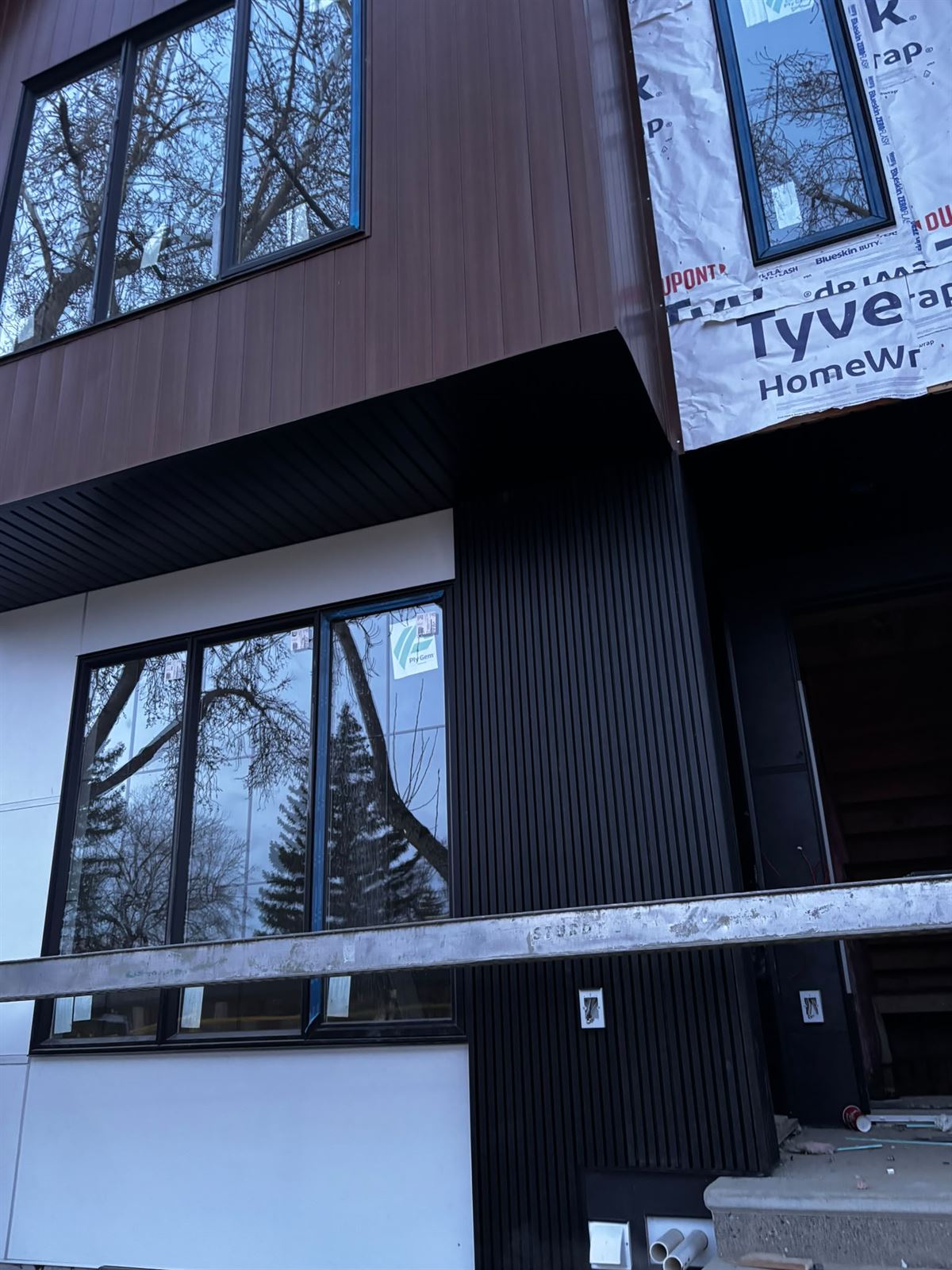
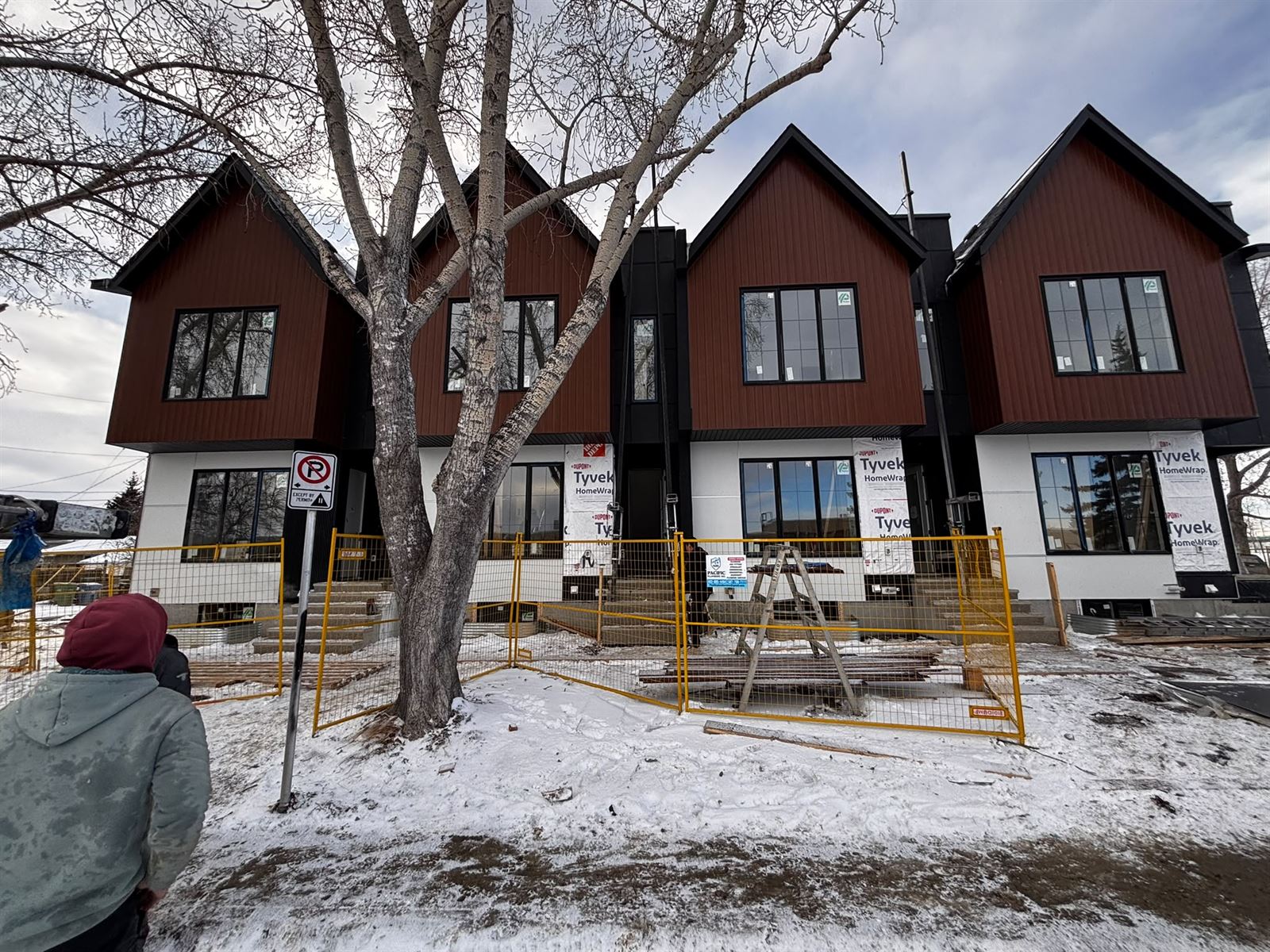
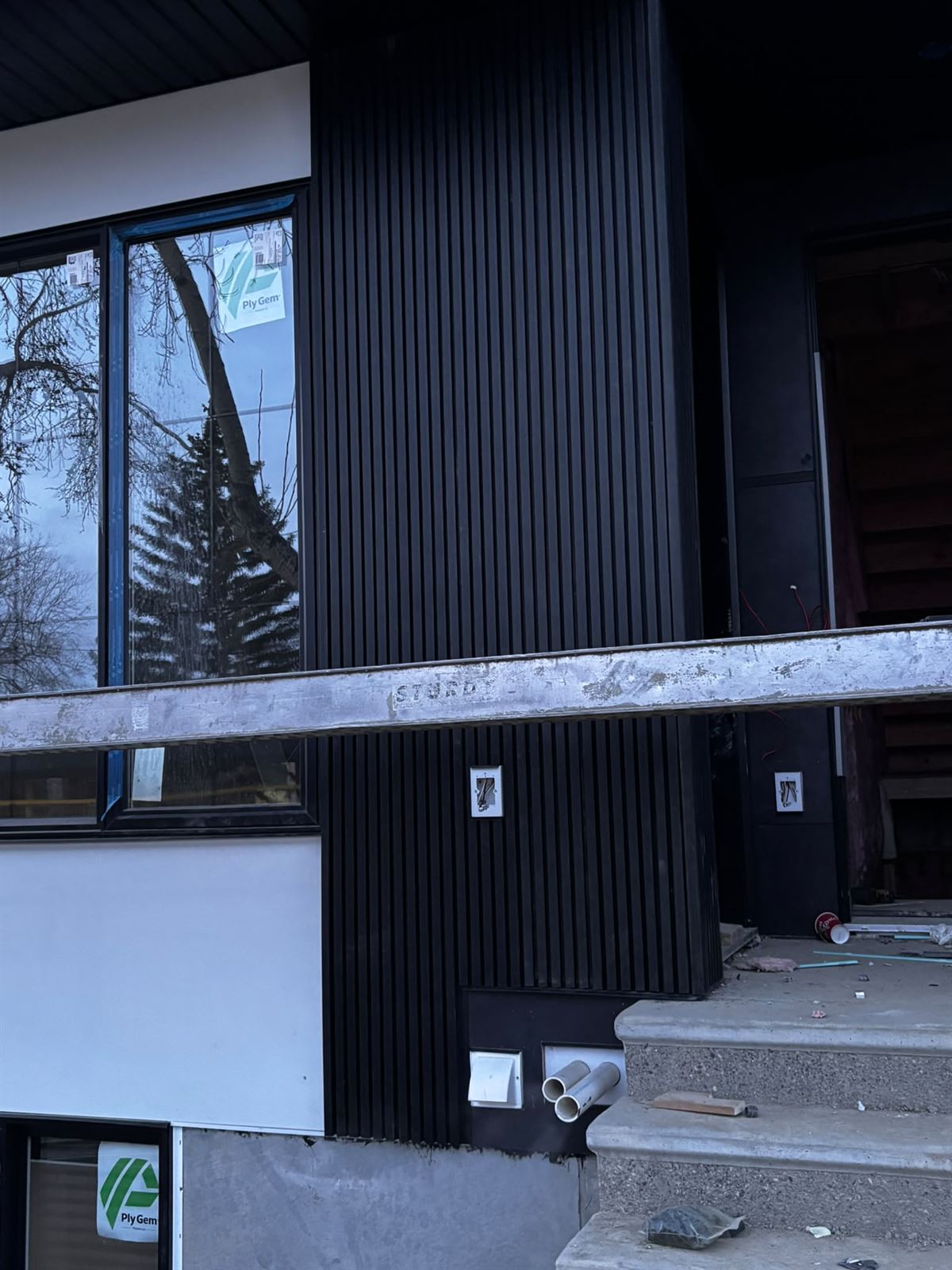
Metal and cedar belong in that conversation too. The black board-and-batten with cedar accents you see across our project gallery is its own answer to hail, and it pairs naturally with hardie on the same house.
Colour, fade and Calgary's high-altitude sun
Calgary sits at over a kilometre of elevation, and the thinner air lets more UV through than most Canadian cities see. Dark vinyl fades noticeably within years on south exposure, while hardie's baked-on factory finishes and repaintable surface hold their colour story much longer.
Fade matters most when repairs happen, because a replacement panel in the original colour stands out against sun-aged neighbours. It's another quiet argument for hardie on the sunny elevations: when a panel does need swapping, paint blends the repair invisibly.
Colour choice itself plays differently by material. Vinyl's darkest tones can overheat and distort on reflective exposures, a problem hardie doesn't share, which is partly why the deep charcoals and blacks dominating modern Calgary exteriors are usually fibre cement or metal, not vinyl.
Five questions to ask any siding quote
Whoever you hire, these five questions separate real quotes from fast ones: What house wrap and flashing details are included? Will you photograph the walls before covering them? How are penetrations and window returns sealed? Is old cladding disposal in the price? And what happens if the sheathing underneath is rotten?
The fifth question matters most. Every honest siding job carries some chance of opening a wall and finding history, and the difference between contractors is whether that moment comes with photos and options or with an invoice. Get the answer in writing before anyone starts.
Installation is half the product
Either material fails early when the layer underneath is wrong. House wrap, flashing and sealed penetrations decide whether walls stay dry for decades, and they disappear behind the panels the day they're installed. Insist on photos of the wall before it's covered, whoever you hire.
Hail also rarely stops at siding. The storm that cracks panels dents gutters and fascia and bruises shingles, so one documented exterior assessment beats three separate contractor visits. If you're doing the post-storm walk-around, our hail damage checklist covers the roof half of the job.
Your next step
Walk your west and south walls this week and look for cracks, chips and loose trim. Then send wall photos through the free quote form or call (587) 581-0198 and tell us which way you're leaning. You'll get hardie and vinyl priced side by side in one written proposal, with the blended option mapped out if your house suits it. The best time to pick siding is before the next storm picks for you.
Frequently asked questions
Is hardie board worth the extra cost in Calgary?
For storm-facing elevations, usually yes. Proven hail resistance, non-combustible material with a Class A fire rating and decades of stable finish are exactly the properties Calgary tests hardest. On sheltered walls, quality vinyl narrows the value gap considerably.
Does vinyl siding crack in cold weather?
Vinyl gets brittle as temperatures fall, so impacts that summer panels absorb can crack winter panels. Chinook cycles make it worse by adding rapid expansion and contraction. It’s the main reason we hesitate to put vinyl on exposed elevations here.
Can you replace just the hail-damaged side of my house?
Yes, when the existing product line and colour can still be matched. Faded or discontinued vinyl often can’t be, and we’ll tell you before work starts rather than leave you with an obvious patch.
Does hardie board need repainting?
Factory-finished hardie holds its colour for many years, backed by the manufacturer’s finish warranty, and repaints when it eventually needs one. That repaintability is an advantage: you can change the colour without changing the siding.
What about metal siding for hail?
Metal board-and-batten takes hail very well and anchors many of the modern exteriors in our gallery. It can show cosmetic denting from extreme stones but rarely loses function. It prices closer to hardie than to vinyl and pairs well with both.
About Silverstone Reno & Construction
Silverstone Reno & Construction Ltd. is a Calgary renovation and exterior company with 15+ years of combined experience across roofing, siding, decks, fences and full renovations. Every project gets a written proposal, one point of contact and a workmanship guarantee. Call (587) 581-0198 or start a free photo quote any time.